
In three days, Drupal turns 25.
Twenty-five years since a Belgian student named Dries Buytaert accidentally created what would become the backbone of whitehouse.gov, nasa.gov, and roughly 2% of the entire web.
I’ve been here for nine of those years. Not since the beginning—I missed the “PHP 4 spaghetti code” era, the Drupal 5 template.php nightmares, and the great “should we adopt Symfony?” debates of 2014.
But I’ve been here long enough.
Long enough to watch Drupal 7 sites refuse to die (bless their stubborn hearts). Long enough to migrate entire enterprises to Drupal 8 and then immediately start planning their Drupal 10 upgrades. Long enough to see headless go from “interesting experiment” to “enterprise standard.”
And long enough to learn a few things.
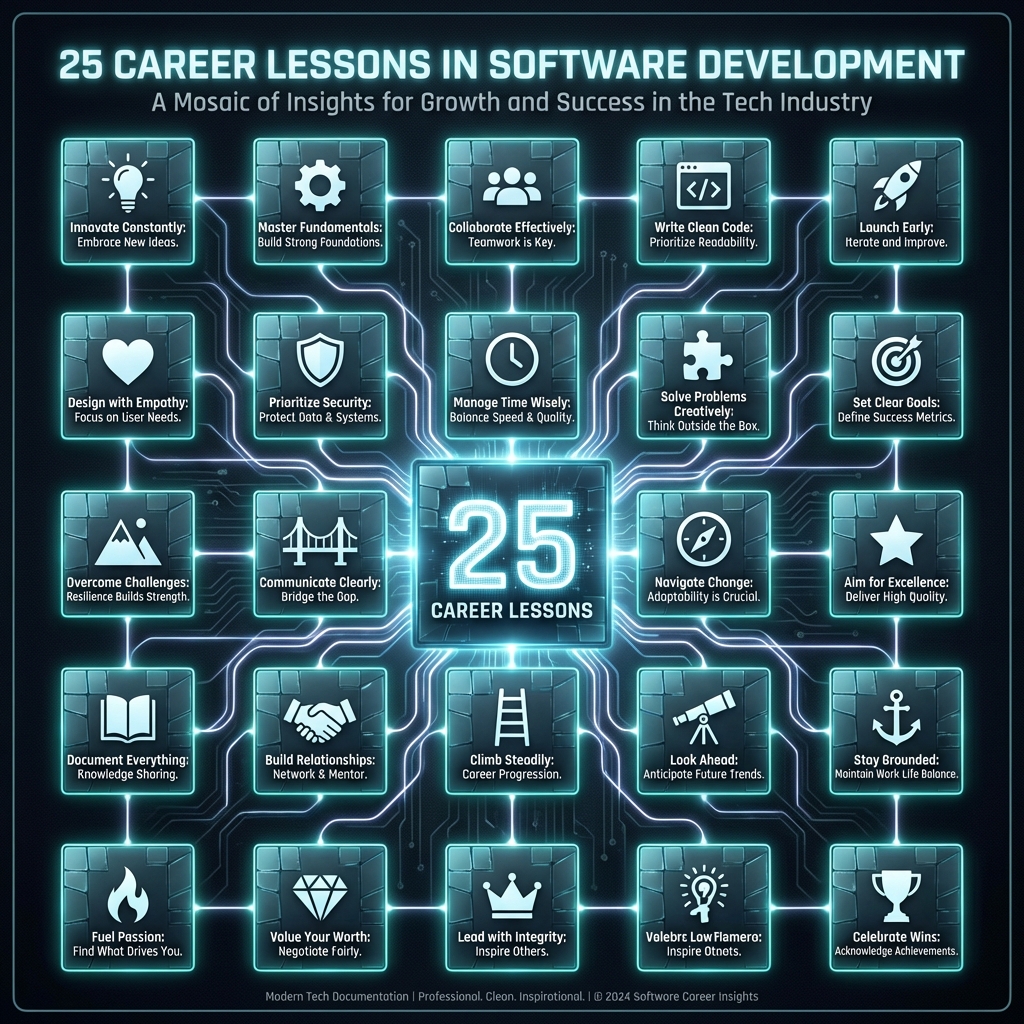
So as Drupal prepares to blow out 25 candles, here are 25 lessons I’ve collected along the way—equal parts technical, philosophical, and occasionally hard-won through spectacular failure.
Consider this my birthday letter to the CMS that shaped my career.
The Technical Lessons
1. Configuration Management Will Save You More Than You’ll Ever Know
Here’s a number that haunts me: zero.
That’s how many times I’ve had to play “spot the difference” between staging and production since we got serious about config management. Before that? I lost count somewhere around “too many Friday nights ruined.”
The workflow is almost boring now:
# On development
drush cex -y

# Review changes
git diff config/sync/

# Deploy to production
drush cim -y
Boring is beautiful. Boring means predictable. Predictable means you sleep at night.
2. Contrib Before Custom—Always, Always, Always
I used to write custom modules for everything. I was proud of it. Look at this bespoke, artisanal code I crafted just for this project!
Then I spent a week debugging a date handling function that the Date module had solved eight years ago.
The math is simple:
| Approach | Initial Time | Maintenance | Security Updates | Community Help |
|---|---|---|---|---|
| Custom code | Fast | You’re alone | You’re alone | Good luck |
| Contrib module | Medium | Community | Automatic alerts | Stack Overflow awaits |
Now my rule is embarrassingly simple: Google “Drupal module [thing I need]” before writing a single line. 90% of the time, someone’s already solved it better than I would have.
3. Views Is Secretly a Programming Language
I’ve seen developers spend days writing custom queries that Views could handle in an hour. I’ve also seen the opposite—Views configurations so complex they make EntityQuery look simple.
The truth is somewhere in the middle:
// When Views is overkill, EntityQuery shines
$nids = \Drupal::entityQuery('node')
  ->accessCheck(TRUE)
  ->condition('status', 1)
  ->condition('type', 'article')
  ->condition('field_category.entity.name', 'Technology')
  ->sort('created', 'DESC')
  ->range(0, 10)
  ->execute();
But for anything involving user-facing configuration, relationships across three entities, or “the client wants to change this tomorrow”—Views wins. Every time.
4. The Cache System Is Your Best Friend (Once You Stop Fighting It)
Early in my career, I treated caching like an enemy. Why won’t this block update? Why is this user seeing stale content? Let me just add ['#cache']['max-age'] = 0 everywhere…
Narrator: This was a terrible idea.
The actual mental model is beautiful once it clicks:
$build['#cache'] = [
  // What makes this content vary?
  'contexts' => ['user.roles', 'url.path'],

  // When should it invalidate?
  'tags' => ['node:42', 'taxonomy_term_list:tags'],

  // How long can it live?
  'max-age' => 3600,
];
Cache contexts answer “when is this different?” Cache tags answer “when is this stale?” Max-age answers “how long if nothing changes?”
I now consider caching first, not as an afterthought. It’s the difference between a site that scales and one that falls over at 1,000 concurrent users.
5. Hooks Are Declining, But They’re Not Dead
Every few months, someone on Reddit proclaims hooks are deprecated. They’re not. They’re just… sharing the stage now.
// Hooks still work perfectly
function mymodule_form_alter(&$form, $form_state, $form_id) {
  // Quick alterations for simple needs
}

// But event subscribers offer more power
class MySubscriber implements EventSubscriberInterface {
  public static function getSubscribedEvents() {
    return [
      KernelEvents::REQUEST => ['onRequest', 100],
    ];
  }
}
My heuristic: hooks for quick wins on existing systems, subscribers for new code that needs testability. Both will exist for the foreseeable future.
6. Paragraphs Changed How I Think About Content
Before Paragraphs, I built monolithic content types. A “Landing Page” type with 47 fields, conditional logic for days, and a body field stretched beyond recognition.
After Paragraphs:
| Component | Fields | Purpose |
|---|---|---|
| Hero | image, title, cta | Page top |
| Two Column | left_content, right_content | Flexible layout |
| Testimonial | quote, author, company | Social proof |
| CTA Block | heading, text, button | Conversion |
Now content types are containers, not specifications. Editors build pages like LEGO sets. I sleep better.
7. The Twig Sandbox Exists for a Reason
{# This is fine: #}
{{ node.title.value }}

{# This will (correctly) fail: #}
{{ node.delete() }}
Twig’s sandbox prevents templates from executing dangerous operations. Every time I see a developer try to bypass it, I remember the Drupal 6 site I inherited where templates could execute raw PHP.
We do not speak of what I found in those templates.
The Career Lessons
8. The Community IS the Product
I’ve used other CMSs. Some have better marketing. Some have shinier dashboards. None have DrupalCons.
There’s something different about a community where:
- Core maintainers answer your questions in Slack
- Contrib module authors actually respond to issues
- Someone in Australia fixes your bug at 3 AM their time because they care
Every client who asks “why Drupal?” gets the same answer: when you hit an edge case at 2 AM on launch night, 100,000 other developers have probably hit it too. And documented it. And fixed it.
9. “Legacy” Is Another Word for “Battle-Tested”
Junior developers flee from legacy code. I understand—it’s not as exciting as greenfield projects with fresh dependencies and zero technical debt.
But legacy code taught me more than any new project ever could:
- Why certain patterns emerge under pressure
- How decisions compound over five years
- What happens when the original developers leave
- Which “temporary fixes” outlive us all
A Drupal 7 site that’s been running since 2014 has survived: four PHP versions, three server migrations, two hosting providers, and countless developers who each left their mark.
That’s not technical debt. That’s archeology. And it’s fascinating.
10. Imposter Syndrome Never Fully Leaves
I’ve been doing this for nine years. I’ve led teams. I’ve architected enterprise platforms. I’m literally preparing for my Acquia certification exam right now.
And last week, a junior developer asked me about the new Recipes API and I had to say, “Let me read the documentation and get back to you.”
That’s not imposter syndrome. That’s the job. The difference between year 1 and year 9 isn’t knowing everything—it’s being comfortable saying “I don’t know yet, but I will.”
11. Drupal Developers Are Quietly In Demand
While everyone debates React vs. Vue vs. Svelte vs. whatever framework launched this month, Drupal developers are quietly employed.
Here’s what I mean:
| Signal | Reality |
|---|---|
| ”Drupal is dying” articles | Published since 2010, still wrong |
| GitHub stars | Lower than trendy frameworks |
| Enterprise job postings | Consistently available |
| Hourly rates | Quietly increasing |
The hype cycle forgot us. Enterprises didn’t.
12. Your First Deploy Will Be Terrifying (And That’s Good)
I still remember my first production deploy. Hands shaking. Terminal open. Team watching.
drush updb -y
drush cim -y
drush cr
Nothing broke. But that fear? That healthy respect for production systems? It never fully leaves. And that’s exactly how it should be.
Developers who’ve never felt that fear worry me.
13. Write It Down While It’s Fresh
The solution that took you three hours to figure out? Document it before you close the terminal. Future you will thank present you. Your teammates will thank you. The developer who inherits your code in three years will genuinely thank you.
I keep a running log:
## 2026-01-10
Problem: Views relationship causing duplicate results
Solution: Use DISTINCT in query settings
Time wasted before solution: 2 hours
Time next occurrence: 5 minutes (because I wrote this)
Documentation isn’t extra work. It’s a gift to your future self.

The Philosophical Lessons
14. “Boring” Technology Is a Superpower
PHP isn’t sexy. Neither is MySQL. Neither is a 25-year-old CMS that prioritizes backwards compatibility over breaking changes.
And yet.
Every “exciting” stack I’ve seen implode had one thing in common: too many moving parts, each changing at its own pace, none of them quite compatible with the others.
Drupal’s “boring” reliability means:
- Vendors who’ve used it for a decade
- Hosting solutions that just work
- Upgrade paths that actually exist
- Problems that have answers
I’ll take boring every single time.
15. Open Source Is an Ethical Choice
I could make more money consulting on proprietary platforms. I choose not to.
There’s something profound about contributing to a codebase that:
- Anyone can inspect
- Anyone can improve
- Anyone can use, regardless of budget
- No corporation can take away
Every commit, every issue filed, every documentation improvement—it compounds. A fix I made in 2019 is still helping people I’ll never meet.
That matters.
16. The Upgrade Path Is the Feature
When Drupal 7 reached end-of-life (finally!), there was a path forward. Not a perfect path—migrations are never fun—but a path.
Compare this to platforms where major versions are essentially different products. Where your investment in version X teaches you nothing about version Y. Where every few years, you start from zero.
Drupal’s commitment to upgrade paths isn’t just a technical feature. It’s respect for the time we’ve already invested.
17. Understanding the Why Matters More Than the How
I can teach anyone the commands to deploy a Drupal site. What takes years is understanding:
- Why we use configuration management instead of database syncing
- Why certain hooks exist and when to avoid them
- Why the Entity API separates storage from display
- Why BigPipe works the way it does
The “how” changes every major version. The “why” stays relevant for decades.
18. Remote Work Forced Better Architecture
When COVID scattered us across home offices, teams who communicated through hallway conversations struggled. Teams who’d invested in documentation, clear interfaces, and explicit APIs barely noticed.
Drupal’s modular architecture—services, plugins, configuration entities—turned out to be accidentally perfect for remote collaboration. Your module doesn’t need to know where I am. It just needs a clean interface.
19. The Best Code You Write Is Code You Delete
My proudest professional moment wasn’t launching a feature. It was removing 3,000 lines of custom code because I found a contrib module that did it better.
Maintenance cost: reduced. Security risk: reduced. My ego: momentarily bruised but ultimately fine.
20. Clients Don’t Want Code—They Want Problems Solved
When a client says “build me a custom content type with these fields,” they’re not asking for a content type. They’re asking for:
- Their editors to stop complaining
- Their content to appear in the right places
- Their SEO to improve
- Their launch deadline to be met
The code is incidental. The outcome is everything.
The Hard-Won Lessons
21. Your Mental Health Is Not a Variables Array to Override
I burned out in 2021. Bad. The kind where you stare at a text editor for 20 minutes without typing anything.
What I learned:
- No deadline is worth your health
- “I’ll rest after this sprint” is a lie
- The code will be there tomorrow
- You will not always be
Take your breaks. Take your vacations. The sites will survive without you for a week. I promise.
22. Explaining Your Choice Gets Easier with Time
Early career: “We chose Drupal because…” (defensive, apologetic)
Now: “We chose Drupal because it’s the right tool for this job, and here’s why.” (confident, specific)
What changed? Nine years of receipts. Successful launches. Happy clients. Sites that are still running.
You don’t need to convince everyone. You just need to know you made the right call.
23. Certifications Matter (But Not How You Think)
I’m studying for my Acquia certification right now. Not because it proves I’m competent—I’ve been proving that for nine years.
I’m doing it because:
- It forces structured review of things I use on autopilot
- It validates knowledge in language clients recognize
- It’s external proof that I take the craft seriously
The badge matters less than the preparation. But the badge doesn’t hurt.
24. The Best Time to Start Was 25 Years Ago. The Second Best Time Is Now.
To everyone who thinks they’re “too late” to the Drupal party:
- Drupal 11 is the most modern Drupal ever built
- The Starshot initiative is making it more accessible
- AI integration is just beginning
- Enterprise demand shows no signs of slowing
You’re not late. You’re early for the next chapter.
25. The Journey Is the Point
I didn’t plan a Drupal career. I stumbled into it, found a community that welcomed me, and kept showing up.
Somewhere along the way, “just a CMS” became:
- A career I’m proud of
- A community I genuinely care about
- Skills that transfer everywhere
- Work that actually helps people
As Drupal turns 25, I raise my glass to:
- Dries, for starting this accidentally
- The core contributors, for keeping it alive
- The contrib maintainers, for extending it endlessly
- And everyone who picked the “boring” choice and never looked back
Happy 25th birthday, Drupal.
Here’s to the next 25. 🎂
What About You?
I’ve shared 25 lessons, but I know I’m not alone on this journey. What has Drupal taught you? What would you add to this list?
Drop a comment. Share your story. Let’s celebrate this milestone together.
After all, the community IS the product.